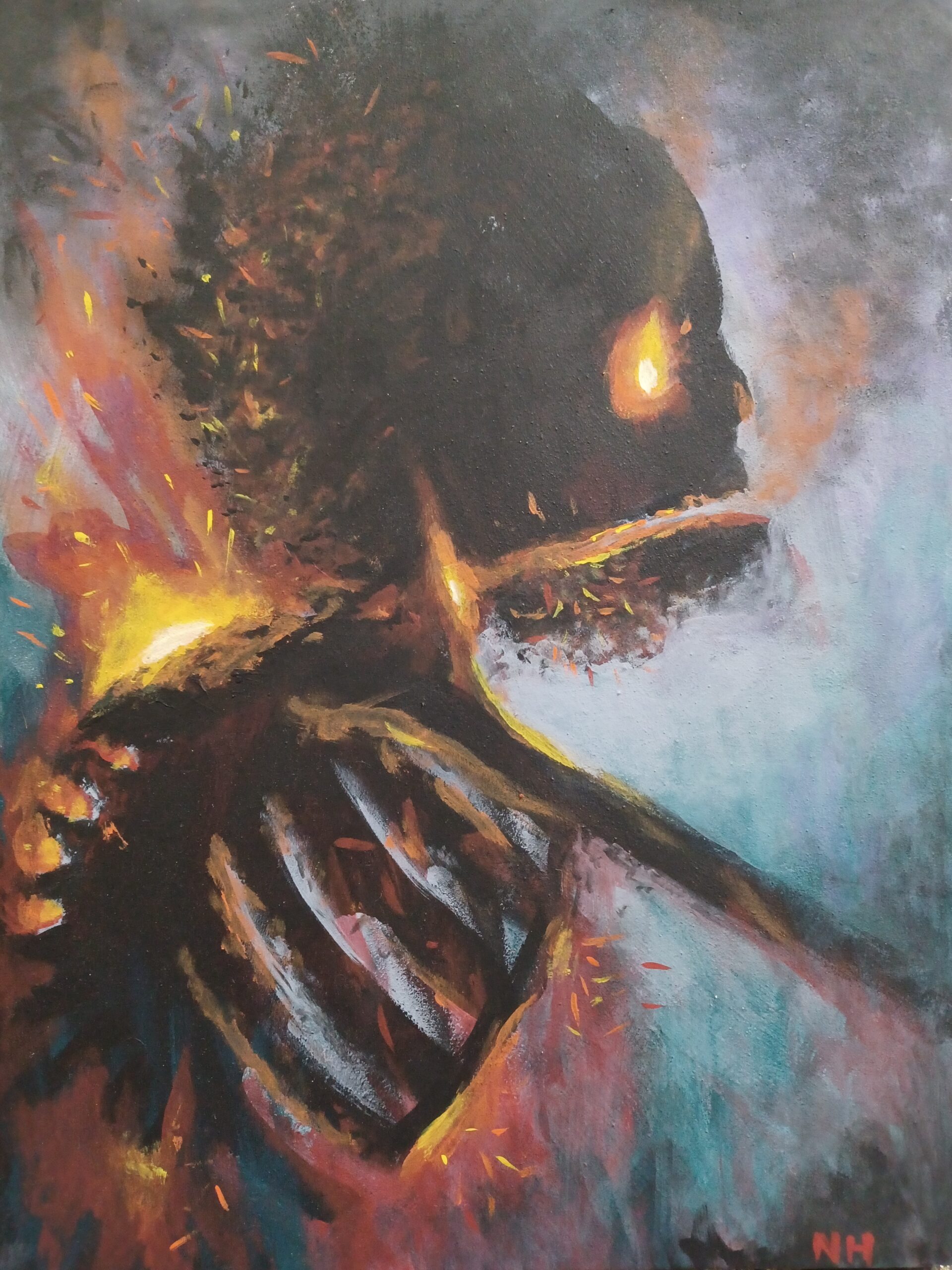
I am autistic, and this is a disability. But what is a disability? If impaired vision is a disability that can be corrected with glasses and the inability to walk can be corrected with wheelchairs, autism is a disability that can be corrected by modifying social expectations.
But as a society we don’t do that. We have two groups of autistics: 1) those who are so impaired that they can’t be productive members of a capitalist society, and 2) those who are able to be productive members of a capitalist society (regardless of the cost to themselves).
What we’re missing here is that people have other things to contribute, like joy, love, companionship, learning, and empathy (yes, autistics have it in droves). And without these things, life feels meaningless. The first group has all these things to offer, regardless of their money-making abilities. The second group has them and some money-making abilities, so they are not recognized as being disabled by society.
And to be clear, it is society that causes the disability by preventing people from having what they need to live their lives with whatever impairment they may have.
In the case of “productive” autistic people, of which I am one, we are expected to take on all the things that neurotypical people take on in the same way that neurotypical people take them on. But what may be automatic and easy for a neurotypical person may require a large amount of thought and energy for an autistic person.
For example, in the past people have been astounded at my ability to pick up programming and software technology as if I’d been using it all my life, while it takes them significant study and practice to get to the same level. What they don’t realize is that the ability I have for that kind of thing is not equal to the ability I have for things like caregiving, social interaction, and sometimes basic “common” sense. Those things, for me, require the significant effort that learning programming does for those people for whom it doesn’t come naturally.
I have never been able to succeed at job interviews* but once I get a job I get nothing but praise for my work.** The problem is that I throw myself fully into it. I will get the job done and I will get it done well. I am efficient, conscientious, hard-working, and reliable. And it kills me.
Any time I have had a full-time job, that’s all that I could do. Get up, work, sleep, get up, work, all for the privilege of being able to do it again the next day. I had no energy left for doing things that I enjoy, and certainly no energy for socializing. I was anxious, existentially depressed, and emotionally dysregulated. I was burnt out.
I got to the point where I had to cut back to part-time, because I have a step-child who is the first type of autistic and requires round-the-clock supervision. May I remind you that caregiving does not come naturally or easy to me. It takes an incredible amount of mental energy, and I cannot anticipate care needs on the fly. I have to be told exactly what to do or I won’t know to do it. This would be true for any child I was put in charge of (like my little brothers when I was young), but it’s exponentially harder (as it is even for neurotypicals) for a child who has special needs.
Unfortunately, part-time work along with full-time caregiving is still a whole part-time job over the full-time jobs I struggled with in the past. So even though I’m working part-time, I’m even more burnt out.
The only thing better than before is my awareness and deliberate effort to minimize what I have to do. I have very little choice in much of it. I have to take care of the kid, because there is no one else to help with it. I have to somehow make money so that we will not be homeless. But don’t expect me to have a clean house. Don’t expect me to cook family meals. Don’t expect me to run errands. Don’t expect me to entertain the kids. Even bathing goes by the wayside if there’s too much else. I need to be alone, with as little sensory bombardment as possible, any time I’m not doing something I have to do.
Doing art, especially the kind of art I’ve been doing lately (on-the-fly intuitive expression rather than planned work), is absolutely vital to my well-being. It’s healing, restorative, and cathartic. If I could focus the majority of my attention on doing art, my mental and physical health would be greatly improved.
Unfortunately, it’s traditionally been the first thing I put on the back burner, because it’s not productive in a society that cares only about money. I know that people make money with their art, but I have not been able to crack that code. I find it nearly impossible to do commissioned art anymore, and I don’t know how to monetize what I do. Selling is another thing that is absolutely not natural to me.
This thing I’m doing now with my art is different. When I start a painting, I don’t have any intention in mind. I pick the colors intuitively and just start slapping it on the canvas however feels right. Then I keep adding and refining until something emerges. I don’t will it there; I just let it happen. And then when it feels finished, I write about the thoughts and feelings it’s brought up in me, and that’s what the painting is about, for me. It may be about something entirely different for you, and that’s awesome.
* The exception to this is the job I got at a company who specifically hired neurodivergent people (on the premise of our untapped productivity), and I’m not sure I’d get that same job today because the job requirements for new hires seem to be a lot more demanding. There’s no more learning on the job, which is my forte.
** The exception to this is a job as a cashier I had briefly when I was in college. You see, so-called “unskilled” labor (there’s no such thing, by the way) is anything but, for me. No amount of training would make me good at being a cashier. I could stock shelves like no one’s business though.
Progress Snapshots


